We have analysed 7 collagen supplements to date.

None of them has clear proof for the main thing it claims. Where you see "mixed or limited", that isn't a no. It usually means the trials are small, short, paid for by the people who make the collagen, or measured something a little different from the claim on the tub. On dose, 5 of the 7 give you at least as much collagen as the studies used. 2 of the labels printed protein but no collagen figure, so we worked their collagen out from that. Whether to take collagen is up to you.

We don't pick a winner. For each product we show what the label prints, whether there's as much collagen as the studies used, and who paid for those studies.

What were you hoping it would do?

Skin

6 of the 7 claim to help with skin.

What the trials found

Try this instead

Check your tub before you buy. We show whether its collagen is at an amount skin trials used, which named peptide those trials tested, and who paid for them.

Check your tub

Where collagen comes from

  • Marine

    Made from
    Fish skin and scales
    Collagen types
    Mostly type I
    Usually sold for
    Skin, hair and nails
    Suits
    Pescatarians. Not vegetarian or vegan.
    What the trials used
    Most skin trials used one named peptide, not a source, and no trial we hold tests marine against bovine.

    Safety note: Not automatically safe with a fish allergy. Check the source on the label, and a pharmacist can help if it is not printed.

  • Bovine

    Made from
    Cow hide and bone
    Collagen types
    Types I and III
    Usually sold for
    Skin, joints, bones and general use
    Suits
    Not vegetarian or vegan.
    What the trials used
    The skin, joint and muscle trials we hold used specific peptides at set amounts; none compares bovine with any other source.
  • Porcine

    Made from
    Pig skin
    Collagen types
    Types I and III
    Usually sold for
    Skin and general use; also the usual gelatine
    Suits
    Not vegetarian or vegan. Not halal or kosher.
    What the trials used
    One named skin peptide we have reviewed is porcine type I; its trials belong to that peptide, not to pig collagen in general.
  • Chicken (type II)

    Made from
    Chicken sternum cartilage
    Collagen types
    Type II, undenatured or hydrolysed
    Usually sold for
    Joints
    Suits
    Not vegetarian or vegan.
    What the trials used
    Undenatured type II at about 40 mg a day has knee osteoarthritis trials, nearly all maker-funded. It is a different ingredient with its own evidence, never compared with gram doses.

    Safety note: Caution with a chicken allergy, and with an autoimmune condition for the undenatured form.

  • Contains no collagen

    Builder

    Made from
    Vitamin C, silica, amino acids or plant extracts. Contains no collagen.
    Collagen types
    None
    Usually sold for
    Sold for collagen, often as collagen support or vegan collagen
    Suits
    Vegetarians and vegans, which is the point of them.
    What the trials used
    Contains no collagen, so none of the collagen trials applies.

No trial we hold shows one source beats another; the choice is diet and allergy.

Labels print the type: types I and III are skin, bone and tendon collagen, type II is cartilage. The trials were run on specific peptides, not on a type number.

Named peptides you will see on packs

  • Verisol

    Gelita

    Source
    Porcine skin, type I
    Sold for
    Skin, hair and nails

    Placebo-controlled trials at 2.5 g a day: about 20% less eye-wrinkle volume at 8 weeks (funding not stated) and a small cellulite change at 6 months (maker-supplied). One open-label nail study. No hair trial.

    Reviewed

    Studied at2.5 g a day in its own trials

  • Fortibone

    Gelita

    Source
    Type I; the maker page does not state the animal
    Sold for
    Bone density

    One placebo-controlled trial: 131 postmenopausal women with low bone density, 5 g a day for a year, spine scan scores up against placebo; the maker part-funded it. A scan number, not fewer fractures.

    Reviewed

    Studied at5 g a day for a year, in postmenopausal women with low bone density

  • UC-II

    Lonza

    Source
    Chicken sternum cartilage, undenatured type II
    Sold for
    Joints

    Knee osteoarthritis trials at 40 mg a day found less pain and stiffness against placebo, and in one against glucosamine with chondroitin; the best trials were maker-funded. Nothing shows it rebuilds cartilage.

    Reviewed

    Studied atAbout 40 mg a day

  • Peptan

    Rousselot (Darling Ingredients)

    Source
    Type I; the maker page does not state the animal
    Sold for
    Beauty, mobility and sports

    We hold no reviewed trial for Peptan yet, so nothing on this site credits it.

    No reviewed trial held yet

  • Naticol

    Weishardt

    Source
    Fish skin, type I
    Sold for
    Skin, joints and physical performance

    We hold no reviewed trial for Naticol yet, so nothing on this site credits it.

    No reviewed trial held yet

  • Fortigel

    Gelita

    Source
    Type I; the maker page does not state the animal
    Sold for
    Joint cartilage and joint discomfort

    We hold no reviewed trial for Fortigel yet, so nothing on this site credits it.

    No reviewed trial held yet

  • Tendoforte

    Gelita

    Source
    Type I; the maker page does not state the animal
    Sold for
    Tendons and ligaments

    No reviewed evidence of its own yet. One of its trials, a small maker-funded Achilles tendon pilot, sits in the evidence we hold for collagen (Praet 2019, PMID 30609761).

    No reviewed trial held yet

  • BodyBalance

    Gelita

    Source
    Type I; the maker page does not state the animal
    Sold for
    Body composition and muscle with resistance training

    No reviewed evidence of its own yet. One of its trials, maker-funded, in older men who trained, sits in the evidence we hold for collagen (Zdzieblik 2015, PMID 26353786).

    No reviewed trial held yet

A named peptide's trials belong to that peptide at its tested amount. A generic powder at the same grams cannot borrow them, and the name alone does not confirm the amount.

How they compare

  • Dose printed
  • Amount hidden
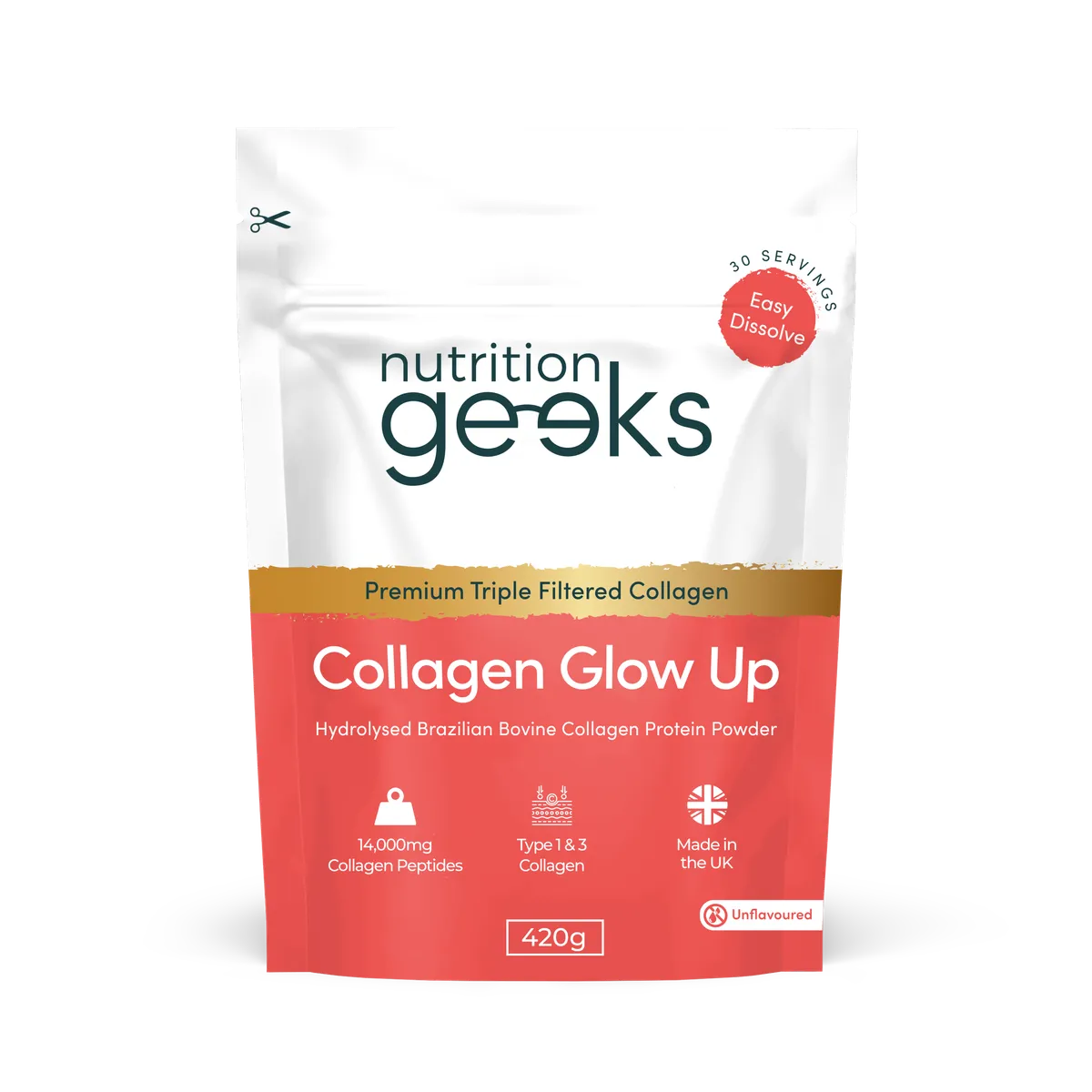
Collagen Glow Up PowderNutrition Geeks5 printed sentences making 2 claims Powder1 of 1doses disclosed
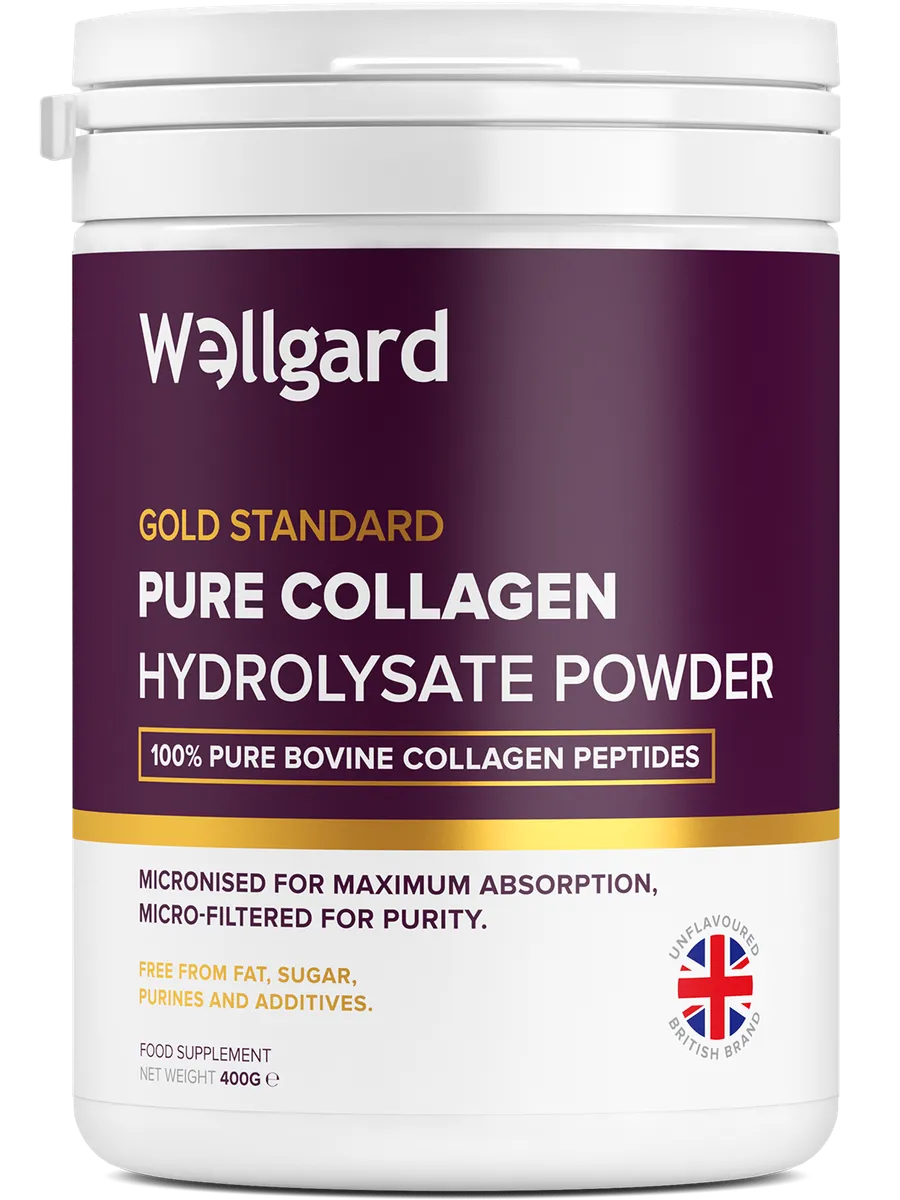
Pure Collagen PowderWellgard1 printed sentence making 3 claims Powder1 of 1doses disclosed
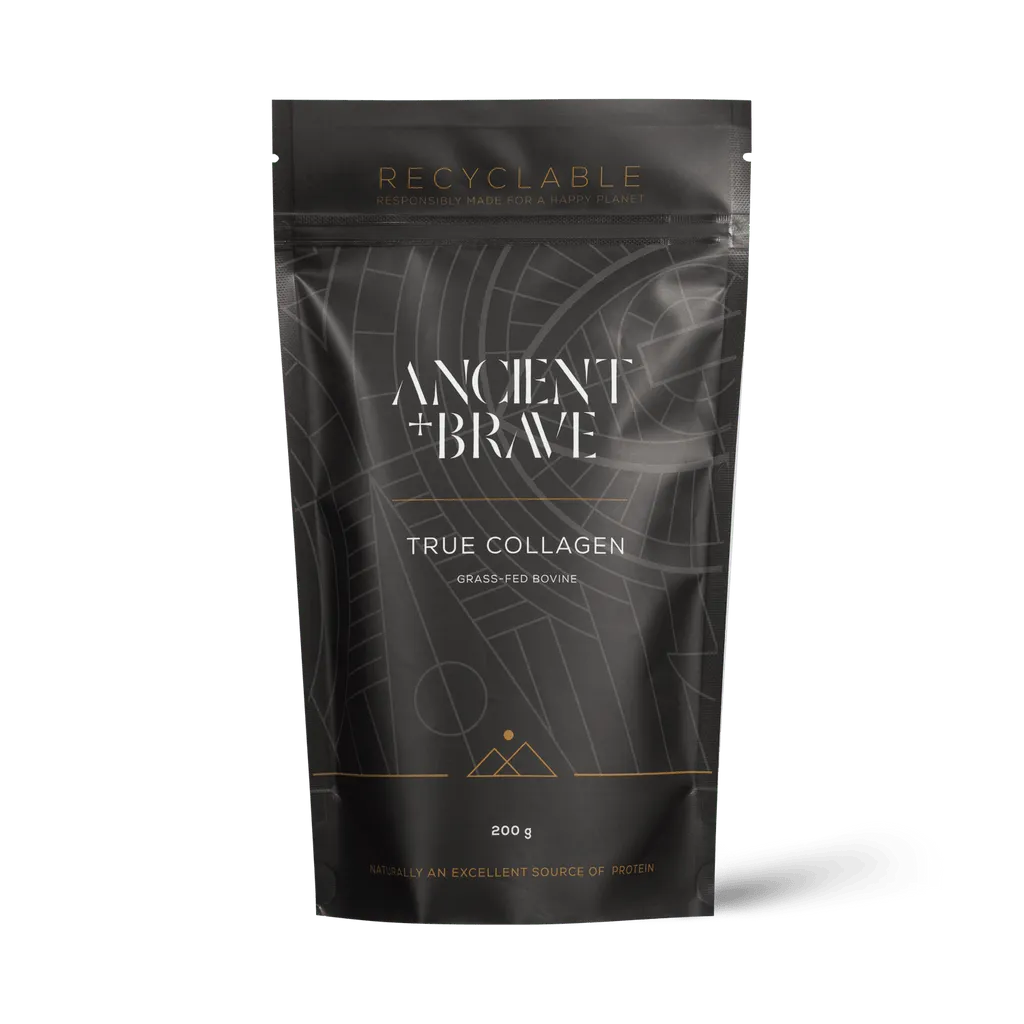
True CollagenAncient + Brave5 printed sentences making 10 claims Powder1 of 1doses disclosed
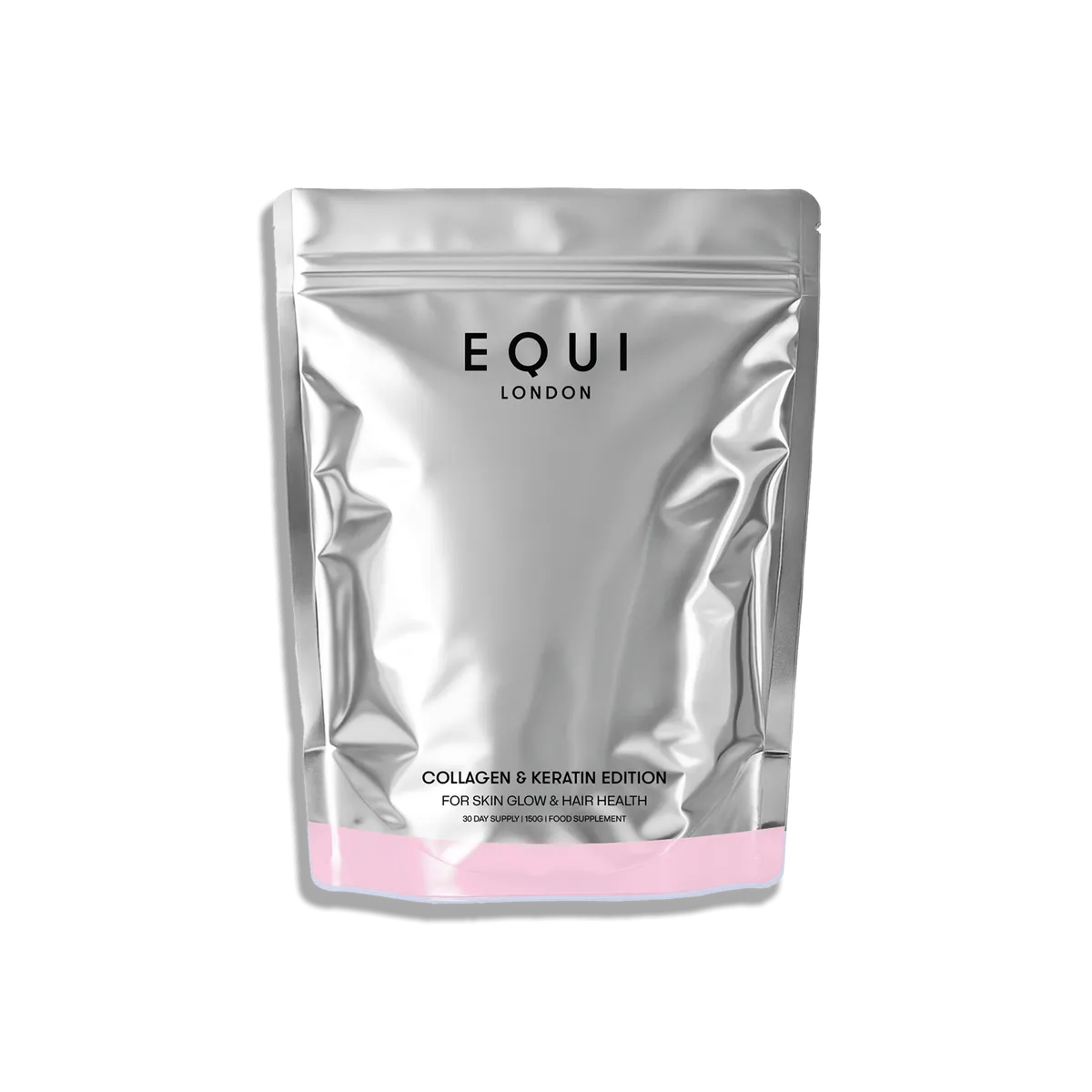
Collagen & Keratin EditionEqui London4 printed sentences making 3 claims Powder3 of 5doses disclosed
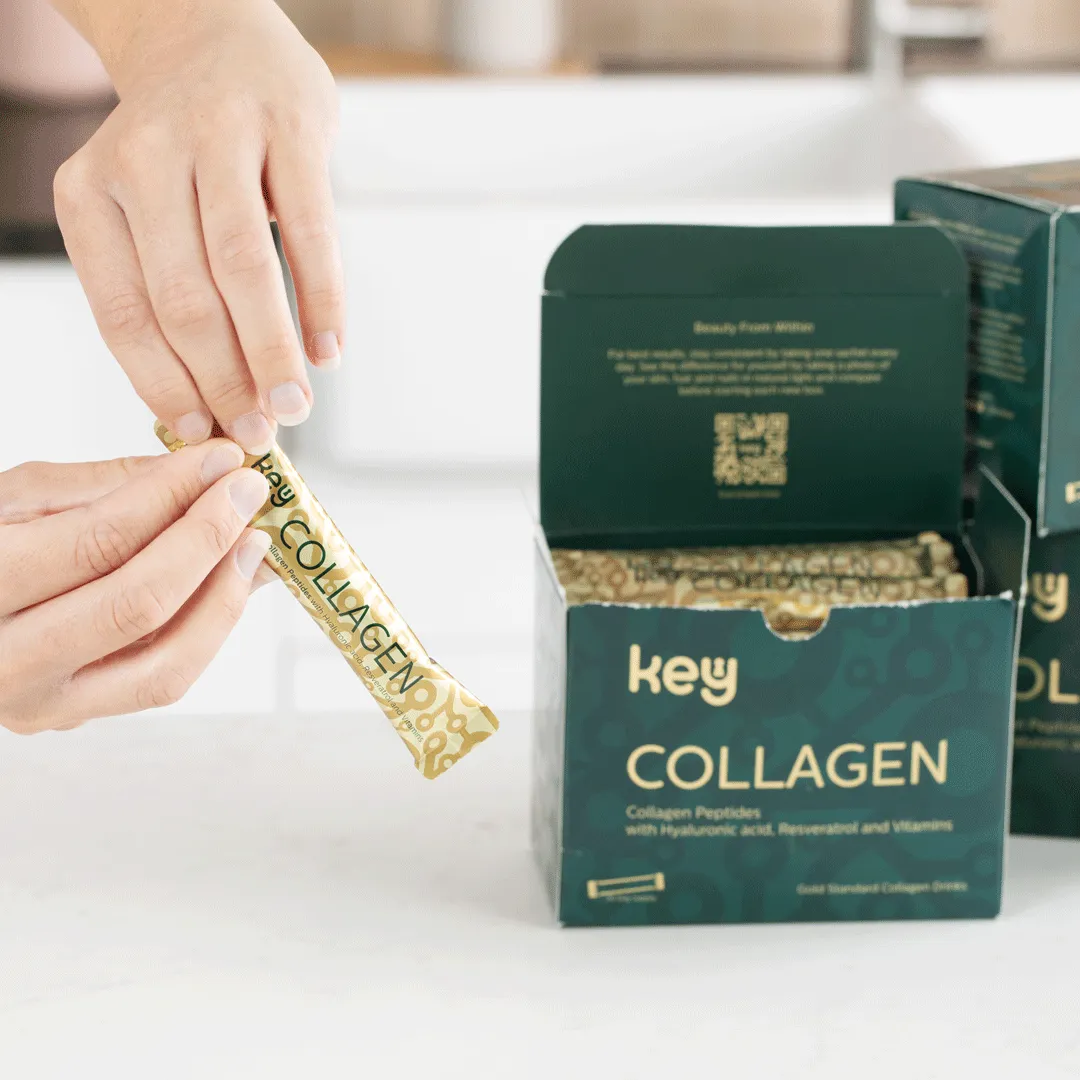
Key CollagenKeyForHer.com12 printed sentences making 7 claims Liquid7 of 7doses disclosed
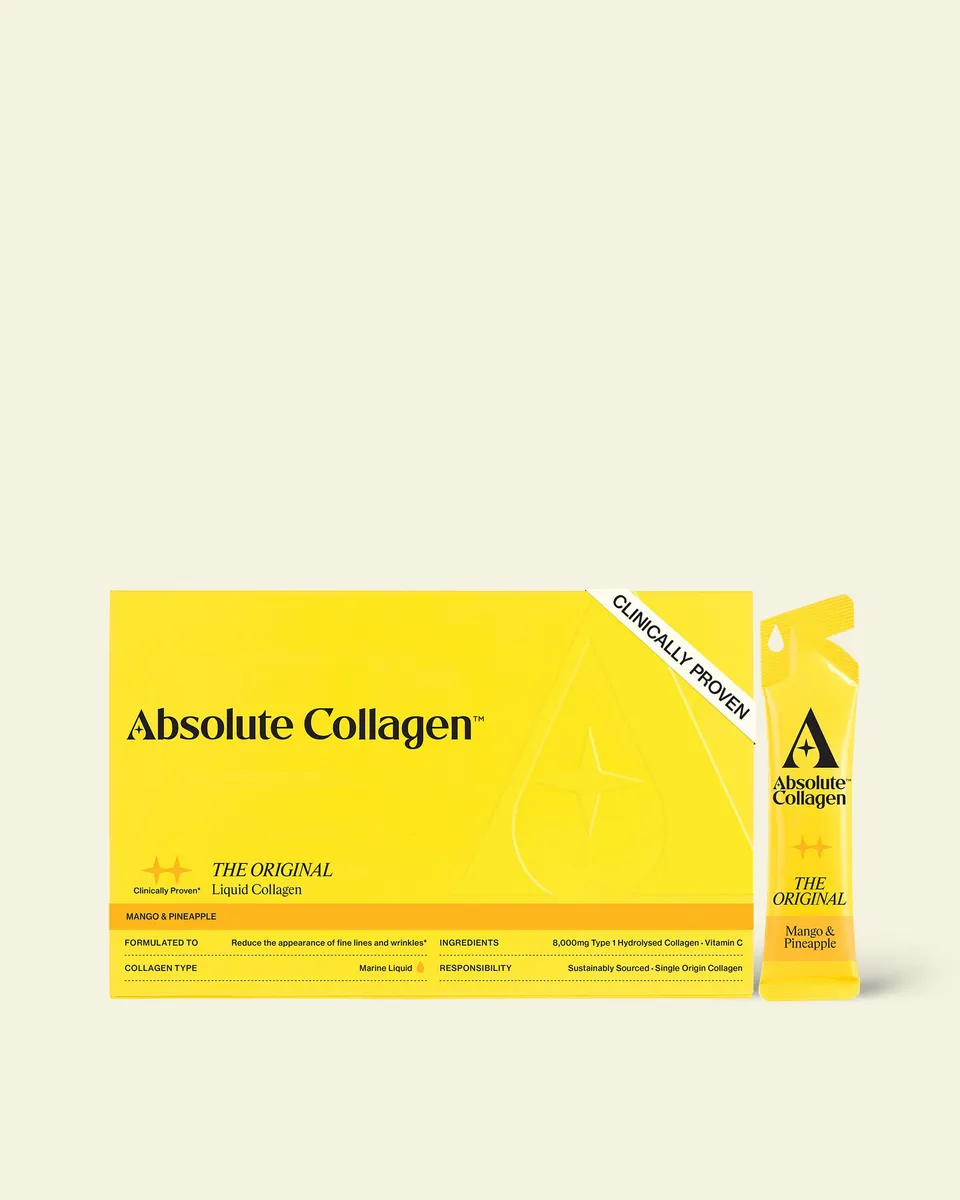
Marine Collagen Liquid DrinkAbsolute Collagen10 printed sentences making 4 claims Liquid2 of 4doses disclosed
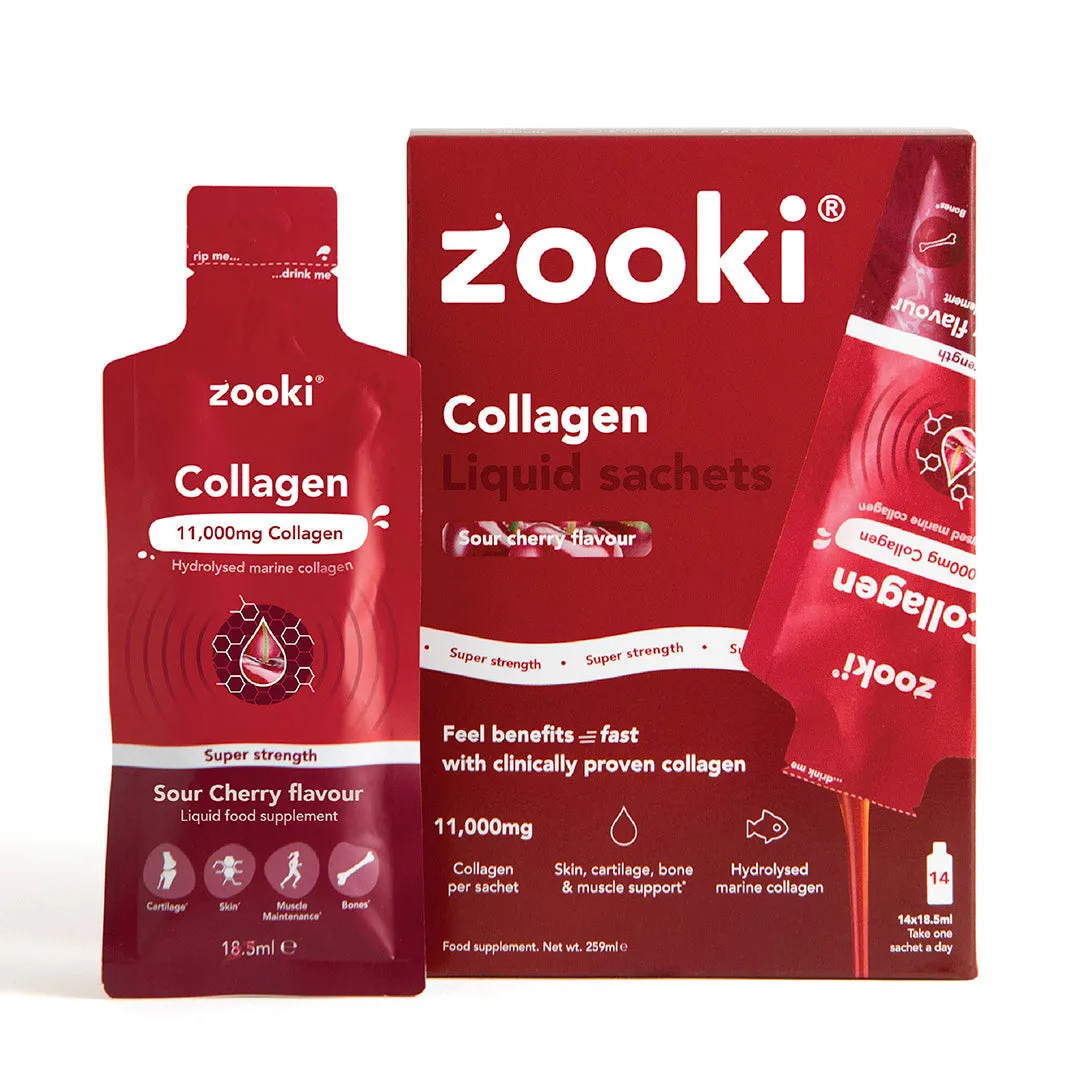
Super Strength Collagen, 11,000mgZooki7 printed sentences making 6 claims Sachets2 of 2doses disclosed

How to read the table

Questions

What is the best collagen supplement in the UK?

We do not pick one. We have checked 7 collagen supplements sold in the UK: none has clear proof for its main claim, and 7 came back mixed or limited. The table shows what each label prints and what the trials measured, so you can choose on facts.

Do collagen supplements work?

We cannot answer yes or no. The trials measured skin hydration and elasticity, joint pain scores in osteoarthritis, and muscle and strength in people who train. The signals are small and mostly from maker-funded trials, and none compares collagen with the same grams of ordinary protein. Across the 7 we checked, none has clear proof for its main claim, and 7 came back mixed or limited.

How much collagen did the studies use?

It depends on the goal. For skin, trials used between 1 and 5 g a day, nearly always one named peptide. For joints, 2 to 10 g, each tied to one product. For muscle with resistance training, 5 to 15 g. Those are the trials' amounts, not a recommendation, and a generic powder at the same grams is not the same ingredient. Each check shows where your tub sits.

Marine or bovine collagen: which is better?

No trial we hold tests one source against the other, so we cannot say. Source is a diet and allergy choice: marine suits pescatarians and is not automatically safe with a fish allergy; bovine and porcine are not vegetarian. The trials were run on named peptides, not on a source.

Is marine collagen OK with a fish allergy?

Not automatically. Marine collagen comes from fish skin and scales, so it is not a safe default for anyone with a fish allergy. Check the source on the label; if it is not printed, count it as unknown. A pharmacist can help you decide.

Does collagen need vitamin C?

Your body needs vitamin C to make its own collagen. That is authorised vitamin wording about avoiding a shortfall, and most people get enough from food. No trial we hold shows that adding vitamin C to a collagen powder adds anything to the result. We count it as a vitamin, not as proof.

Is type II collagen the same thing?

No. The collagen in most powders is type I or III peptides at gram doses. Undenatured type II, from chicken cartilage, is taken at about 40 mg a day for joints, and its knee osteoarthritis trials are nearly all maker-funded. It is a different ingredient with its own evidence, never compared with gram doses, so we keep it off this page.

What is a collagen builder?

A product sold for collagen that contains none: usually vitamin C, silica, amino acids or plant extracts, often labelled vegan collagen. None of the collagen trials applies to it. We mark these as no collagen on the label.
What the trials actually found

One short note per goal, in the same order as the strip at the top. The small numbers point to the trials listed under each note. These are ingredient facts, not product facts: no tub is named.

Skin

Pooled across 23 trials, skin hydration, elasticity and wrinkles improved, but only in the 16 trials the industry paid for, not in the rest1. One named peptide improved elasticity in 69 women; the maker supplied it2. No trial compares collagen with the same grams of ordinary protein.

The trials

  1. Collagen peptides, 1 to 5 g a day, 23 trials, 1,474 people, mostly women aged about 30 to 60, 8 to 12 weeks: hydration, elasticity and wrinkles improved, but only in the 16 industry-funded trials. Myung 2025, PMID 40324552
  2. One named peptide, 2.5 or 5 g a day, 69 women aged 35 to 55, against placebo: elasticity improved; the maker supplied the peptide. Proksch 2014, PMID 23949208

Hair and nails

What we hold for hair is not yet reviewed, and for nails it is thin. The one brittle-nail study had no placebo group1, and the only placebo-controlled nail trial measured colour, with four of its five authors at the maker2. One hair trial, not yet reviewed, measured hair-shaft thickness3; nothing we hold tests collagen for hair loss.

The trials

  1. One named peptide, 2.5 g a day, 25 people with brittle nails, 24 weeks: open-label with no placebo group; the paper does not say who paid. Hexsel 2017, PMID 28786550
  2. Collagen, 5 g a day, 85 healthy women aged 43 to 65, 12 weeks, against placebo: the only nail measure was colour; four of the five authors were with the maker. Vleminckx 2024, PMID 39143887
  3. A fish collagen peptide, 1 g a day, 114 women: hair-shaft diameter measured alongside skin and cellulite. Not yet reviewed by us. Hwang 2026, PMID 41788055

Joints

The joint trials were run in people with knee osteoarthritis, not in shoppers with no diagnosed joint problem. Across 11 trials, symptom scores improved, with different products pooled and the makers paying for most of them1. In one trial, pain and function scores improved while scans of the joint showed no clear change2.

The trials

  1. Collagen products at 2 to 10 g a day, 11 trials, 870 people with knee osteoarthritis: symptom scores improved; each trial tested one product, and most were paid for by the makers, so a plain powder cannot borrow the result. Simental-Mendía 2025, PMID 39212129
  2. One named product, 3 g a day, 80 people with knee osteoarthritis, 180 days: pain and function scores improved, joint-space width on scans showed no clear change; the maker funded it. Park 2025, PMID 40977985

Bones

Plain collagen for bones is not yet reviewed in what we hold. The one placebo-controlled bone trial used a named peptide in 131 postmenopausal women with low bone density: bone density scans improved over a year, with the maker part-funding it1. That is a scan number, not fewer broken bones, and a plain powder cannot borrow it.

The trials

  1. One named peptide, 5 g a day, 131 postmenopausal women with low bone density, 12 months, against placebo: spine and hip density rose; the maker part-funded it; no fracture outcome was measured. König 2018, PMID 29337906

Gut

We hold no reviewed trial of collagen for gut health, bloating or the gut wall. One small study exists, with no placebo group and 14 of 40 people finishing it; we have not reviewed it, so we do not count it1.

The trials

  1. Collagen peptides, open-label with no placebo group, 14 of the 40 women recruited finished: self-reported digestive symptoms. Not yet reviewed by us. Abrahams 2022, PMID 35639457

Muscle with training

Every trial we hold paired collagen with resistance training; without training, none shows an effect. Across 19 studies of healthy adults who trained, the gains in muscle and strength were small, and several trials were industry-linked1. In older men with age-related muscle loss, a named peptide added more than training alone, funded by its maker2, and one small tendon pilot sits here too3.

The trials

  1. Collagen peptides, 5 to 15 g a day, 19 studies, 768 healthy adults doing resistance training: small gains in fat-free mass and maximal strength, certainty low to moderate; the review had no outside funding, but several pooled trials were industry-linked. Bischof 2024, PMID 39060741
  2. One named peptide, about 15 g a day, older men with age-related muscle loss doing resistance training: more fat-free mass and strength than training alone; maker-funded. Zdzieblik 2015, PMID 26353786
  3. One named peptide, 5 g a day with calf exercises, a small pilot in people with Achilles tendon symptoms: symptom scores improved; maker-funded. Praet 2019, PMID 30609761